Austral Islands with
Rapa
Austral Islands with Rapa
The Austral islands guarantee a trip out of time, an immersion in Polynesia, far, very far from the beaten track.
13 days / 12 nights
Itineraries | Schedule | Cabin & Rates
Day 1
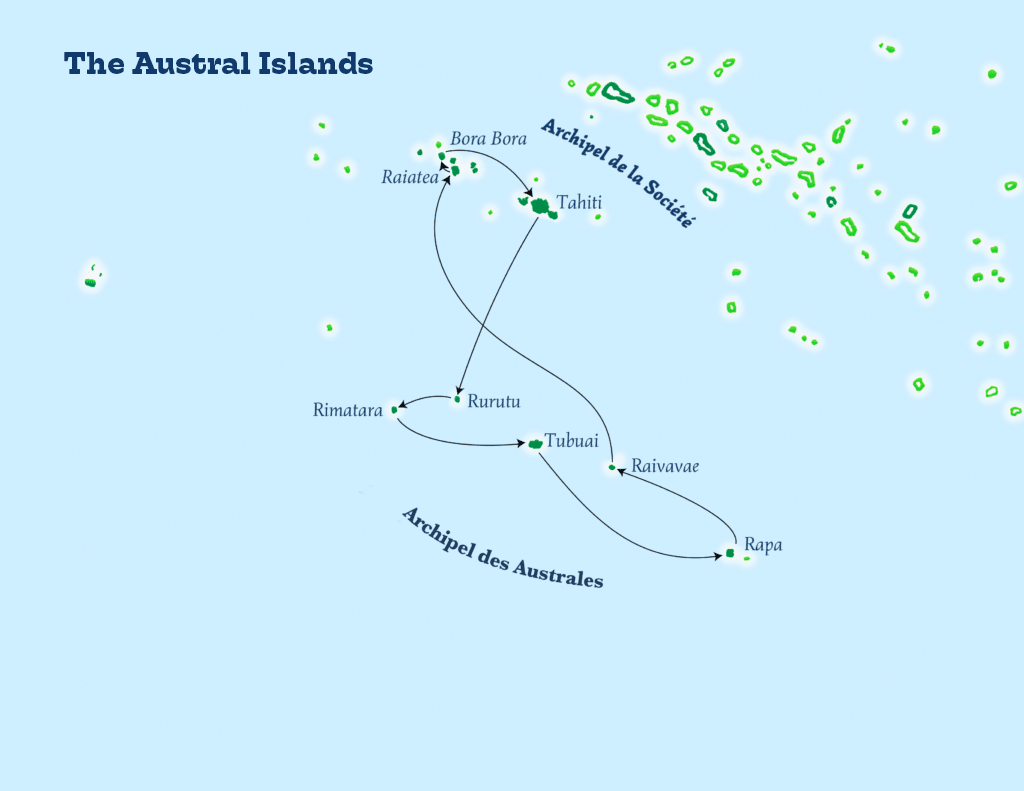
Departure from Tahiti (Papeete) - Moorea
Check-in begins at 09:00 am at the Papeete Cruise Terminal. At 12:00 pm, the Aranoa will cast off, ready to take you to Tahiti’s sister island: Moorea before the Austral Islands. A journey of culture, tradition and unforgettable landscapes awaits you.
The Aranoa will arrive in Moorea at around 2:00 p.m., allowing passengers to visit and take part in a few optional activities.
At 22:00 the ship will leave the Society Islands for the Austral Islands.
Day 2
At sea
A day to relax on the Pool Deck or in the comfort of our air-conditioned Salon. Or why not simply enjoy the view of the South Pacific Ocean as we return to the Society Islands. Lectures on the company’s culture and history will give you a complete overview of the values upheld by the company. True to the Polynesian experience, the entertainment remains as traditional as ever: initiation to Polynesian songs and Tahitian dance, not forgetting our shows and dances under the stars.
Day 3
Rimatara, Austral Islands
The Aranoa disembarks at the “Taanini” quay. A small circular volcanic plateau, Rimatara, the last island in the archipelago to be discovered in the 19th century by Captain Samuel Pinder Henry, has preserved its ancient traditions, including its own dialect. It is home to an endemic bird, the stunning and colorful Lori de Kuhl, the “Ura”, also found in the Cook Islands. After passing through a purification smoke, an ancient welcoming tradition, explore the main villages of Amaru, Anapoto and Motuaura by mini-bus or truck. In the ancient Amaru cemetery, facing the sea, lies the entire lineage of kings and queens who ruled the island of Rimatara. Legend has it that if you make a face in front of the royal tomb, you’ll be disfigured for the rest of your life. A barbecue will be served on Motuaura beach. Its crystal-clear waters are ideal for snorkelling and diving. Covered with tarodera and fruit trees, Rimatara is a flowering garden with a freshwater well. The discovery of the red parakeet “Ura” is offered as an optional activity (registration at reception).
Day 4
Rurutu, Austral Islands
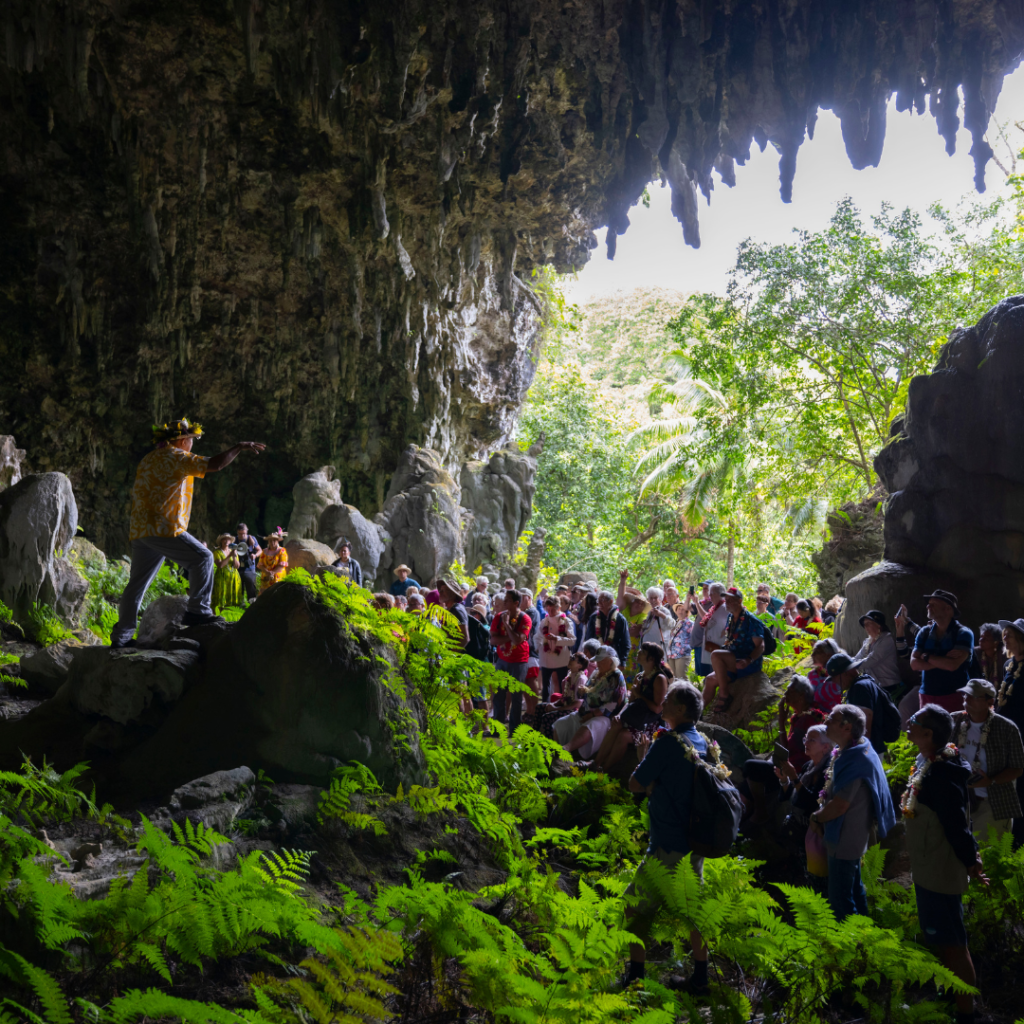
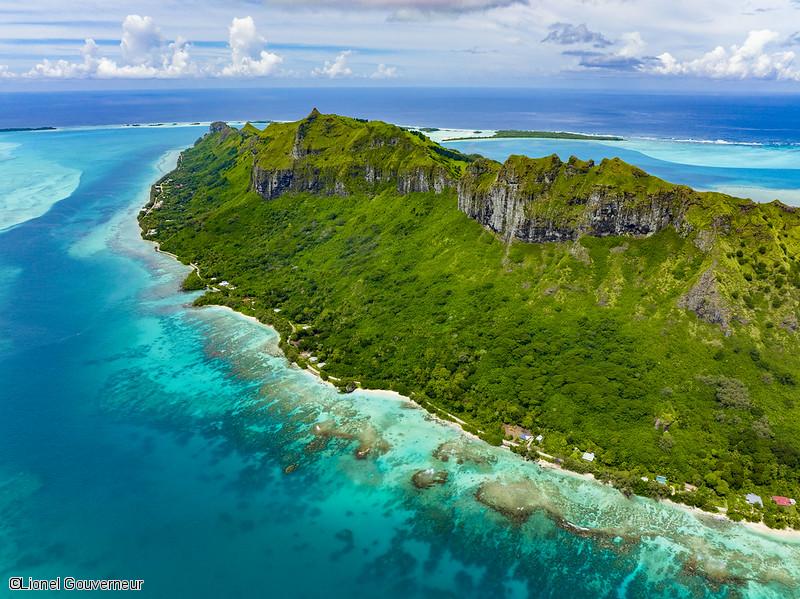
Rurutu, one of the two largest raised atolls in French Polynesia, is unique for its geological structure, which is surprisingly unusual in the South Pacific. Basalt and limestone cliffs dotted with caves where islanders once lived, a volcanic interior with lush tropical jungle, white sand beaches and magnificent bays offer breathtaking panoramas. Rurutu is known throughout Polynesia for the exceptional quality of its basketry, such as magnificent hats, bags and baskets or carpets made from pandanus leaves and other natural materials. With the Aranui at anchor off Rurutu, after lunch on board, passengers disembark in barges at the “Moerai” quay, where they are greeted with a performance of local songs. Enjoy some free time in the peaceful village of Moerai.
Day 5
Tubuai, Austral Islands
Arriving by barge at the Baie Sanglante landing stage, passengers are greeted at the town hall, wreaths of flowers around their necks, to the sound of local music. You can watch demonstrations of the arts and crafts of pandanus leaf weaving and shell necklace making, both unique to the island. The island’s fertile soil and cooler climate are ideal for growing cabbage, lettuce and potatoes. The day’s activities include a truck tour of the island’s cultural sites, the ‘PO TUI TUI’ marae, Fort George, the first refuge of the Bounty mutineers from July to September 1789, and Bloody Bay, witness to the fighting between the islanders and the mutineers. Lunch on board. The beach at Bloody Bay invites you to dive and explore with a mask and snorkel. Certified diving is available as an optional activity (register at reception).
Day 6
Raivavae, Austral Islands
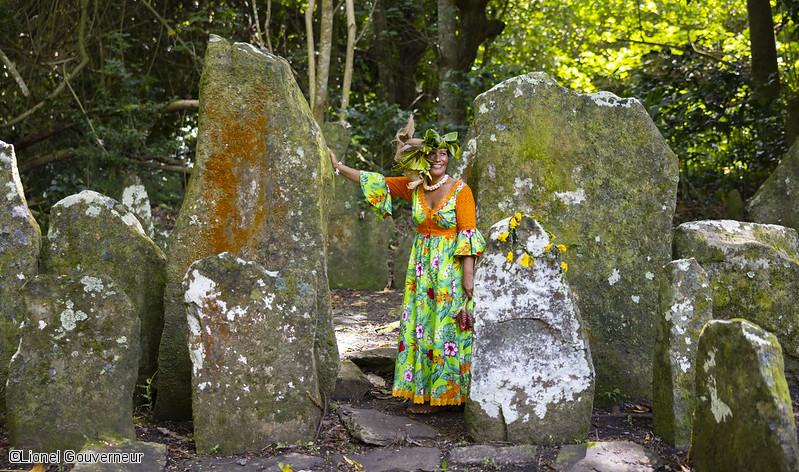
Raivavae, nicknamed the “Bora Bora of yesteryear”, seduces with its motu, preserved traditions and authentic charm. From the quay at Rairua, passengers aboard the Aranoa are greeted with music and wreaths of flowers. A tour of the island reveals the “Smiling Tiki”, hidden marae and a stoup tasting. A traditional buffet is served in Rairua, followed by a stroll through the village. The following day, hikers will explore Heirani Point, while others will discover the “Pupu” shell necklaces. Optional: the idyllic motu Vaiamanu and the coral garden.
Day 7
Raivavae, Austral islands
Take advantage of the remaining time to stroll through the village or discover its lush lagoon with a mask and snorkel. A visit to Mount Hiro is optional (please register at reception).
Day 8
Rapa, Austral Islands
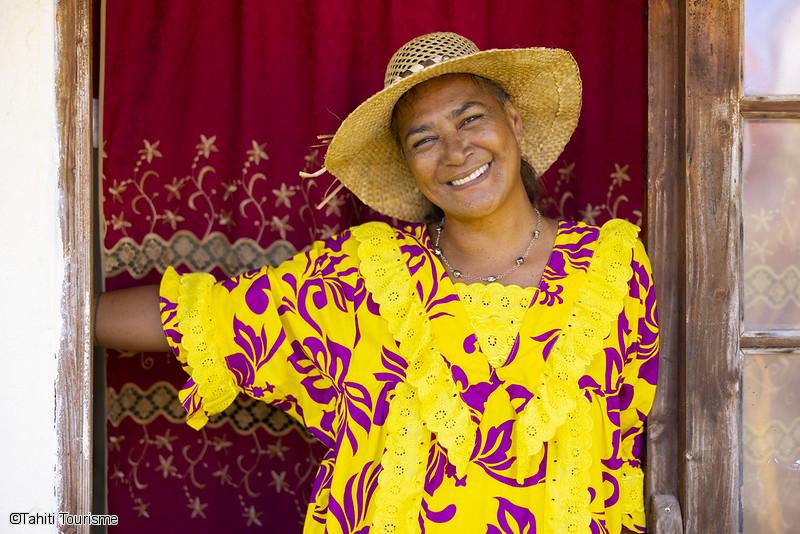
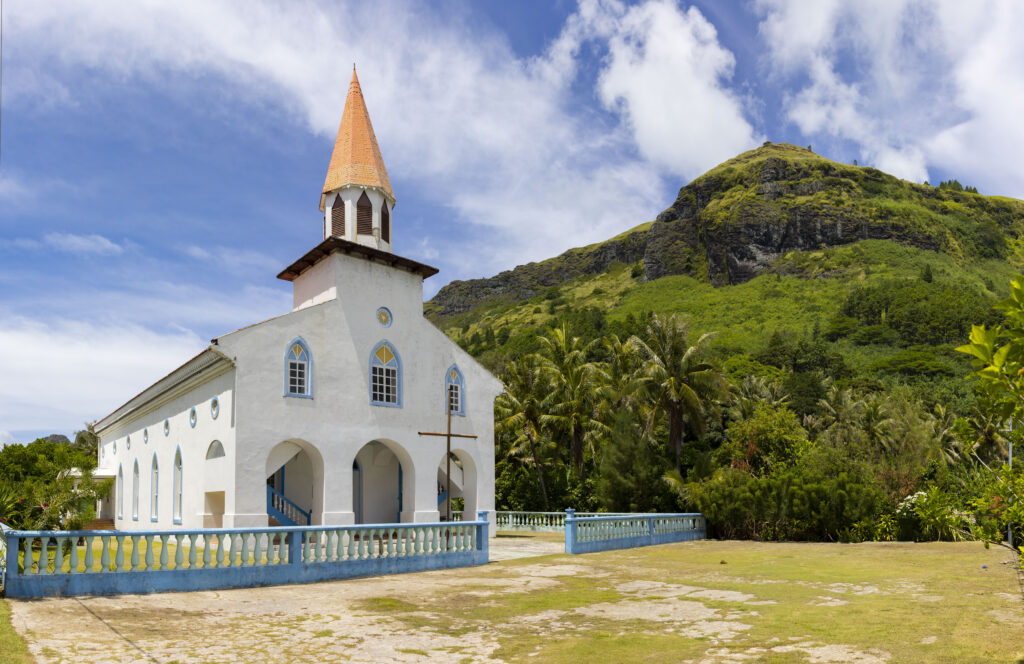
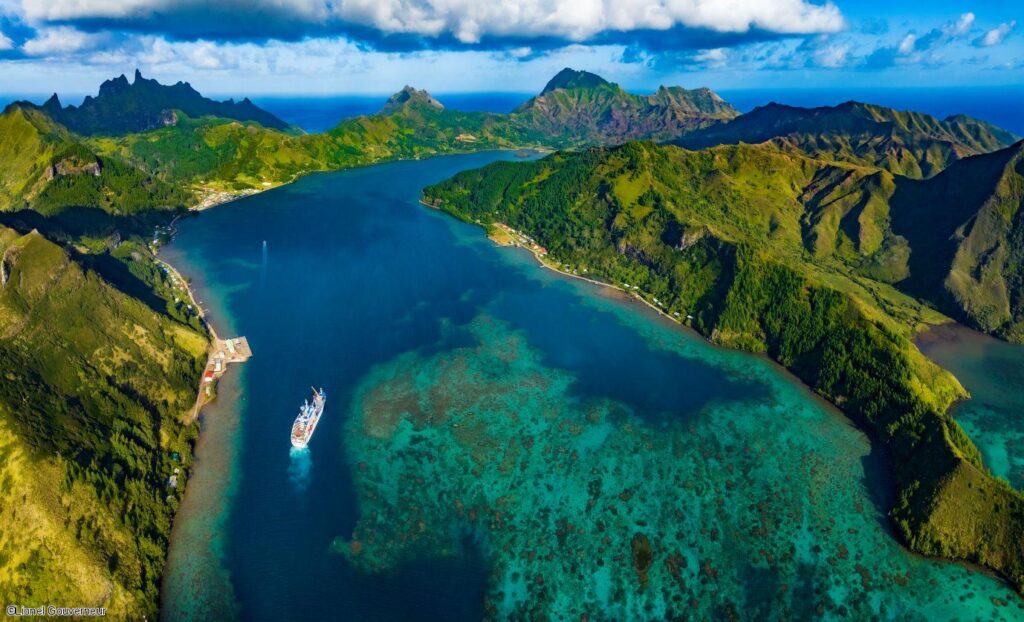
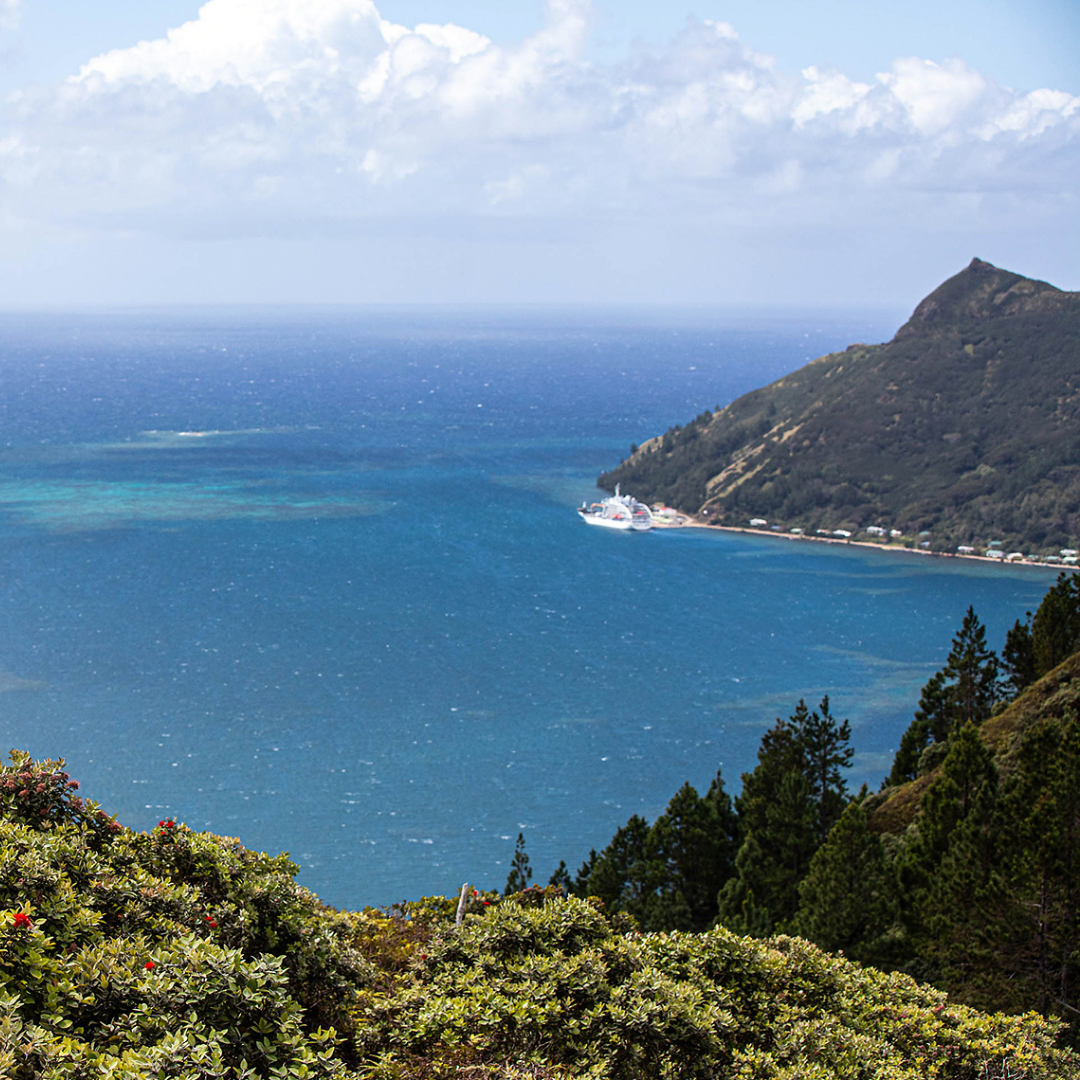
As we approach Rapa, accessible only by sea, the captain can announce: “Welcome to Rapa. Next stop Antarctica”. Rapa, Easter Island’s little sister, is the southernmost and most isolated of the Austral Islands. It is shaped like a crescent, with a coastline cut by 12 very deep bays. It has a temperate climate, with no coral reefs or coconut palms, and non-tropical fruits and vegetables: apples, peaches, nectarines… The Aranoa docks at Ahurei. Passengers are greeted, wreaths of flowers around their necks, to the typical sounds and rhythms of Rapa. Trucks await you, heading for the cultural center. Here you’ll discover how the “mamas” make local crafts: hats and baskets from reed (a fragile material) and bamboo crafts. On Rapa, we suggest a 2h30 hike to Fort Morango Uta.
Day 9
Tubuai, Austral Islands
Tubuai is the most populated island in the Austral Islands, with a splendid lagoon and a rich heritage. Welcomed at Bloody Bay with music and wreaths, passengers set off on a truck to discover the Vaitauarii marae, Fort George – refuge of the Bounty mutineers – and the sites of their battles. Barbecues, swimming and optional diving punctuate this day of history and nature.
Day 10
At sea
A day to relax on the Pool Deck or in the comfort of our air-conditioned Salon. Or why not simply enjoy the view of the South Pacific Ocean as we return to the Society Islands. Lectures on the company’s culture and history will give you a complete overview of the values upheld by the company. True to the Polynesian experience, the entertainment remains as traditional as ever: initiation to Polynesian songs and Tahitian dance, not forgetting our shows and dances under the stars.
Day 11
Raiatea, Society islands
The cradle of Polynesian civilization, Raiatea – formerly Havai’i – was the starting point for the great migrations to Hawaii, New Zealand and Easter Island. On the quayside, you’ll be greeted by the sound of to’ere, the tiara in your ear. By bus, explore the Taputapuatea marae, a UNESCO-listed sacred site. Optional: pirogue trip down the Faaroa River or certified diving. In the afternoon, stroll through Uturoa’s boutiques after lunch on board.
Day 12
Bora Bora, Society islands
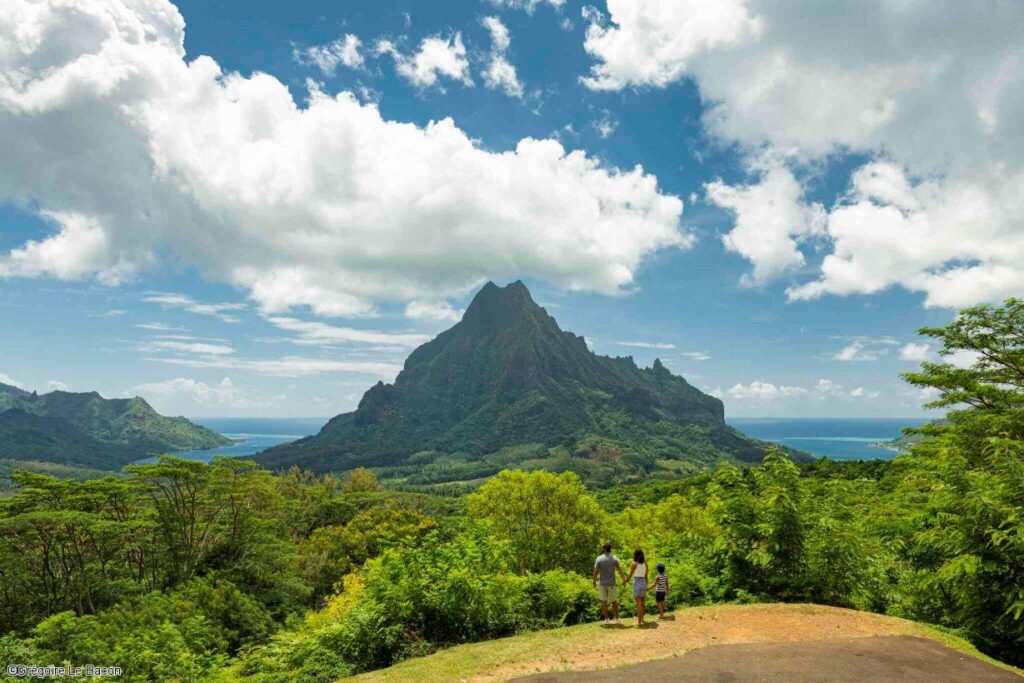
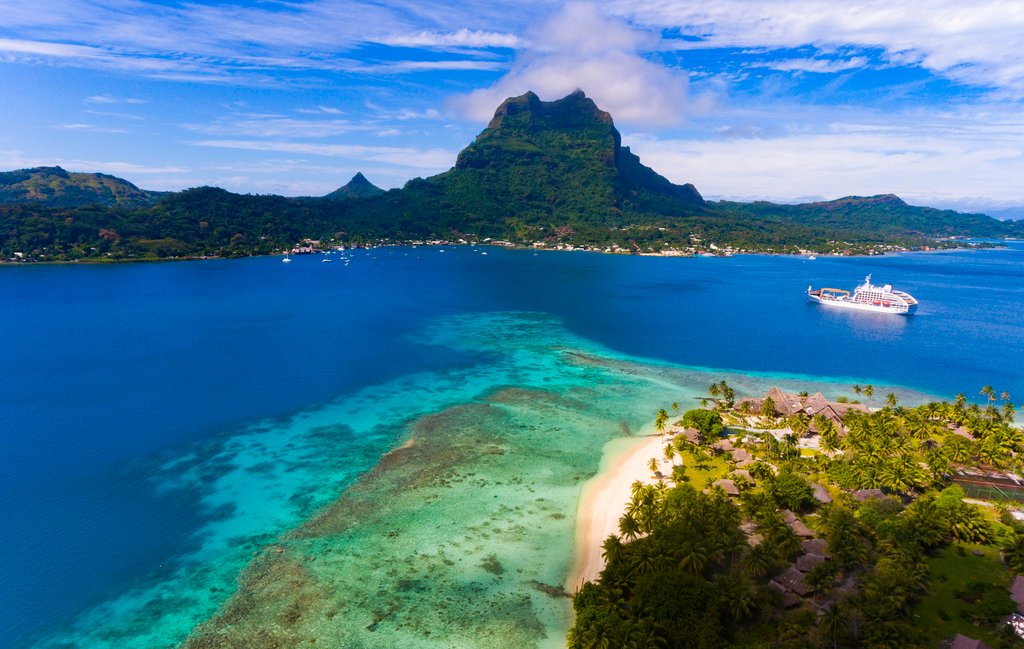
As you arrive in Bora Bora’s world-famous lagoon of opalescent blues and greens, you will be greeted by the majestic “Mount Otemannu”, the highest peak on the island. You can enjoy a day at the beach and a barbecue on a private Motu surrounded by crystal clear waters, the “Motu Tapu”. You can also choose from a veriety of option excursions at an additional cost: scuba diving, boat and motorized canoe tours of the lagoon, swimming with sharks and rays! Bora Bora was an American military outpost during World War II and remnants of the war such as cannons and bunkers can be seen on a 4X4 tour. Departure in the evening for Papeete.
Day 13
Return to Tahiti (Papeete)
After days rich in encounters, grandiose landscapes and shared traditions, the Aranoa returns to the port of Papeete. Between engraved memories and faded necklaces, hearts remain full of emotions and stories to tell.
Austral Islands with Maupiti- 2027
| Cruise # 04 | Saturday 06 March – Thursday 18 March | AUSTRAL ISLANDS WITH RAPA |
| Cruise # 08 | Saturday 15 May – Thursday 27 May | AUSTRAL ISLANDS WITH RAPA |
| Cruise # 10 | Saturday 19 June – Thursday 01 July | AUSTRAL ISLANDS WITH RAPA | Cruise # 13 | Saturday 07 August – Thursday 19 August | AUSTRAL ISLANDS WITH RAPA |
| Cruise # 17 | Saturday 09 October – Thursday 21 October | AUSTRAL ISLANDS WITH RAPA |
| Cruise # 20 | Saturday 27 November – Thursday 09 December | AUSTRAL ISLANDS WITH RAPA |
Presidential Suite
- Veranda deck - 6
- 41 m²
- 3 adults
Approximately 41 m² and a 7 m² private balcony, this exterior suite offers a dining and living area with a sofa bed, as well as a separate bedroom with a king bed or twin beds, 2 bathrooms with shower and hair dryer, a refrigerator and a safe.
Double Occupancy
AUD 15,594
price per person
Single Occupancy
AUD 23,082
price per person
Owner Suite
- Veranda deck - 6
- 41 m²
- 3 adults
Approximately 41 m² and a 7 m² private balcony, this exterior suite offers a dining and living area with a sofa bed, as well as a separate bedroom with a king bed or twin beds, 2 bathrooms with shower and hair dryer, a refrigerator and a safe.
Double Occupancy
AUD 15,594
price per person
Single Occupancy
AUD 23,082
price per person
Grand Royal Suite
- Pool deck - 7
- 30 m²
- 3 adults
Approximately 30m² and a 15 m² private balcony, this exterior suite offers a dining and living area with a sofa bed, a bedroom with a king bed or twin beds, a bathroom with a shower and hair dryer, as well as a half bathroom, a refrigerator and a safe.
Double Occupancy
AUD 14,880
price per person
Single Occupancy
AUD 22,011
price per person
Royal Suite
- Boat deck - 5, Veranda deck - 6, Pool deck - 7
- 31 m²
- 3 adults
From approximately 31 m² and a 7 m² private balcony, this exterior suite offers a bedroom with a king bed or twin beds and a living room with a sofa bed, a bathroom with shower and hair dryer, a refrigerator and a safe.
Double Occupancy
AUD 12,371
price per person
Single Occupancy
AUD 18,248
price per person
Premium Suite
- Veranda deck - 6
- 23 m²
- 2 adults
From approximately 23 m² and a 5 m² private balcony, this exterior suite offers a bedroom with a king bed or twin beds and a living room with a sofa bed, a bathroom with shower and hair dryer, a refrigerator and a safe.
Double Occupancy
AUD 11,339
price per person
Single Occupancy
AUD 16,701
price per person
Junior Suite
- Boat deck - 5, Pool deck - 7
- 17 m²
- 2 adults
Double Occupancy
AUD 11,107
price per person
Single Occupancy
AUD 16,353
price per person
Superior Deluxe
- Boat deck - 5, Veranda deck - 6, Pool deck - 7
- 16 m²
- 2 adults
From approximately 16 m² and a 5 m² private balcony, this exterior stateroom offers a bedroom with a sitting area, a king bed or twin beds, a bathroom with shower and hair dryer, a refrigerator and a safe.
Double Occupancy
AUD 10,938
price per person
Single Occupancy
AUD 16,099
price per person
Deluxe
- Upper deck - 4, Pool deck - 7, Sun deck - 8
- 15 m²
- 2 adults
From approximately 15 m² and a 5 m² private balcony, this exterior stateroom offers a bedroom with a king bed or twin beds, a bathroom with shower and hair dryer, a refrigerator and a safe.
Double Occupancy
AUD 10,149
price per person
Single Occupancy
AUD 14,915
price per person
Stateroom
- Lower deck - 2, Main deck - 3, Upper deck - 4
- 17 m²
- 2 adults
From approximately 17- 20 m² and no balcony, this exterior stateroom offers a bedroom with a king bed or twin beds, a bathroom with shower and hair dryer, a refrigerator and a safe. A Standard Family Stateroom is also available, offering a 23 m² bedroom with a king bed or two twin beds and a bunk bed with twin beds.
Double Occupancy
AUD 8,049
price per person
Single Occupancy
AUD 11,765
price per person
Class C
- Lower deck - 2, Main deck - 3, Upper deck - 4
- 33 m²
- 1 to 1 adults
Dormitory style accommodations, this category consists of 2 exterior, four passenger cabins of shared space, offering 33 m², 4 single beds, a living and dining area, a bathroom with shower and hair dryer.
Single Occupancy
AUD 5,190
price per person
What's included
Rates include
Cruise transportation and related taxes (tourist tax, port tax, fuel, TDC), shipboard accommodation, 3 meals per day, a bottle of wine to share among 4 passengers for scheduled onboard meals, lunches in local restaurants, planned guided shore excursions to remote villages and archaeological sites, cultural dance shows, lecturers onsite and onboard. Rates are per adult, in double or single occupancy. These fares are correct at the time of printing and are subject to change; with or without notice.
Rates do not include
Shipboard purchases, liquor, gratuities, port taxes other than those specifically provided for, and other personal items. Rates quoted at the time of printing are based on current costs and are subject to change up to and including the date of sailing.
Itinerary changes
Routes and activities are indicative and can be modified according to weather conditions or availability. CPTM pledges to make every effort to operate all cruises as advertised. CPTM reserves the right to alter or curtail the itinerary, or substitute sightseeing, ports of call or conveyances as deemed necessary.
Optional excursions
At every port, guests can enjoy included excursions. For a bit more adventure, there are optional activities from which to choose. The optional activities can be booked on board and at an additional cost.
Cruise in the austral islands, the secret archipelagoe
Discovered by Europeans in the 18th Century, the Australs are located 373 miles (600 km) south of Tahiti’s capital city. The archipelago is made of seven islands, five of which are inhabited – Rimatara, Rurutu, Tubuai, Raivavae and Rapa – and four of which are accessible by air. 6,800 people live in the Austral islands, an off the beaten track archipelago of untouched and mysterious land where white sand clashes with the intense blue of the lagoons.
Breath-taking landscapes, from sheer mountains to valleys and high plains, these islands are famous for their farming activities. Several archaeological remains witness to a well organised, pre-European community of rich cultural and religious practices. The cliffs and caves of the Austral Islands were ancient burial grounds and now provide a platform from which visitors can watch Humpback Whales frolic in the water just offshore as they come here from August to October to give birth.
Passengers on board Aranui 5 will take a guided tour of the island’s colourful, picturesque villages and discover the handiwork of islanders who mainly live off their artwork. During their Polynesian cruise they will also enjoy watching fishermen, farmers and basket weavers at work and are unlikely to leave without purchasing a hat or a woven basket to remind them of their magical time in the Austral Islands.
Stopovers
During its cruise to the Austral Islands, Aranoa will call at the five main islands of the archipelago.

Rapa, the fruit island
Located in the middle of the Pacific Ocean, Rapa Iti is the most isolated and southernmost inhabited island of the Austral archipelago. The particular shape of the island and its remoteness does not allow one to get there by plane: only ships have access. The island is home to a population of 507, described as «the happiest people in the world”. It is so isolated that the inhabitants speak reo rapa, a language that is different from the rest of the Austral Islands. Rapa registers the lowest temperature of the 5 archipelagos: a low of up to 8°C during the dry season (July-August, with records as cold as 4°C). Thanks to this climate, visitors will find a delicious flora, unique in Polynesia: including apples and pear trees, and nectarines… An orchard worthy of the Garden of Eden! As Aranui’s passengers approach Rapa, which is only accessible by sea, the Captain may announce: “Welcome to Rapa. Next stop Antarctica.” As the southernmost inhabited island, this crescent shaped island — with a fjord-like coastline deeply indented by 12 bays —is as remote as it gets in French Polynesia. Rapa-Iti —or “small Rapa”, as the island is also called —has a strong cultural connection to Easter Island, known as Rapa-Nui or big to the Polynesians. Legend tells of the settlement of Rapa-Nui by the people of Rapa-Iti. Once home to fierce warriors who lived in fortified settlements built on terraces among volcanic peaks, the islanders now live more peaceful lives by farming and fishing.
Rurutu, the nothern island of the Austral
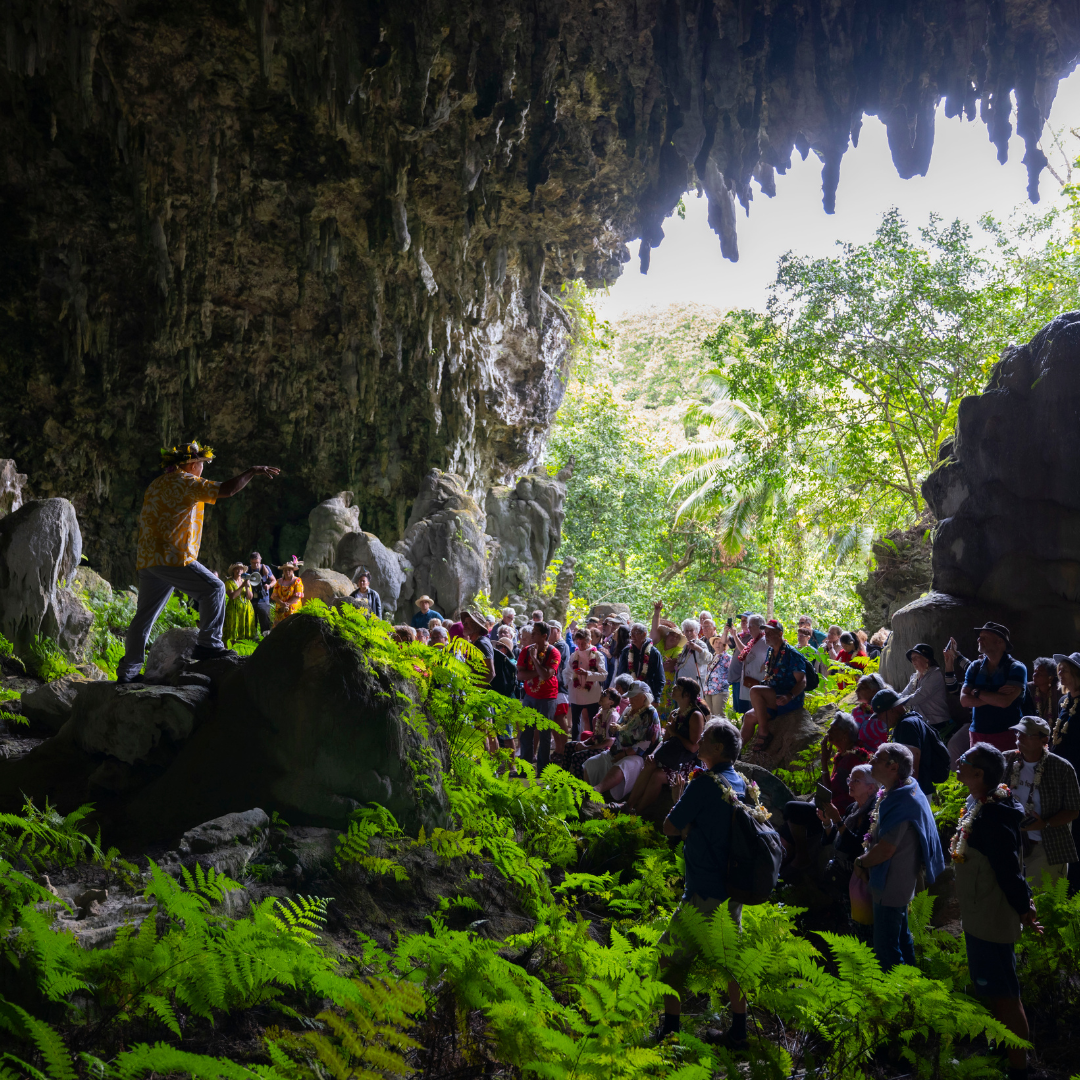
The island formation of Rurutu is not what one expects to see in the South Pacific. Its basalt and limestone cliffs are dotted with caves where the islanders once lived close to its white sand beaches and beautiful bays, whilst its volcanic interior hides a lush tropical jungle. Both combining to create stunning visuals for Aranui’s passengers. Archaeological digs have uncovered ancient settlements, council platforms and marae temples in the village of Vitaria, showing man’s presence around 900 A.D. Rurutu is known throughout Polynesia for the exceptionally fine quality of its woven products. From August to October each year, humpback whales can be seen and heard in Rurutu, where they come south to mate and give birth.
Raivavae, the lagoon island of the Austral Islands
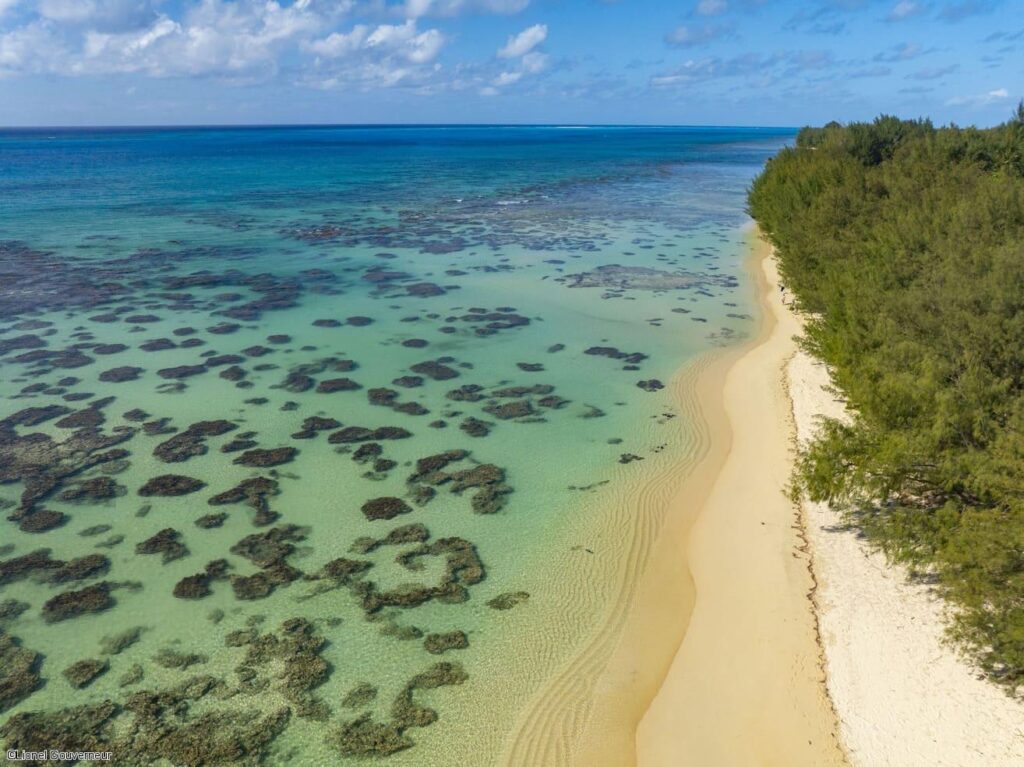
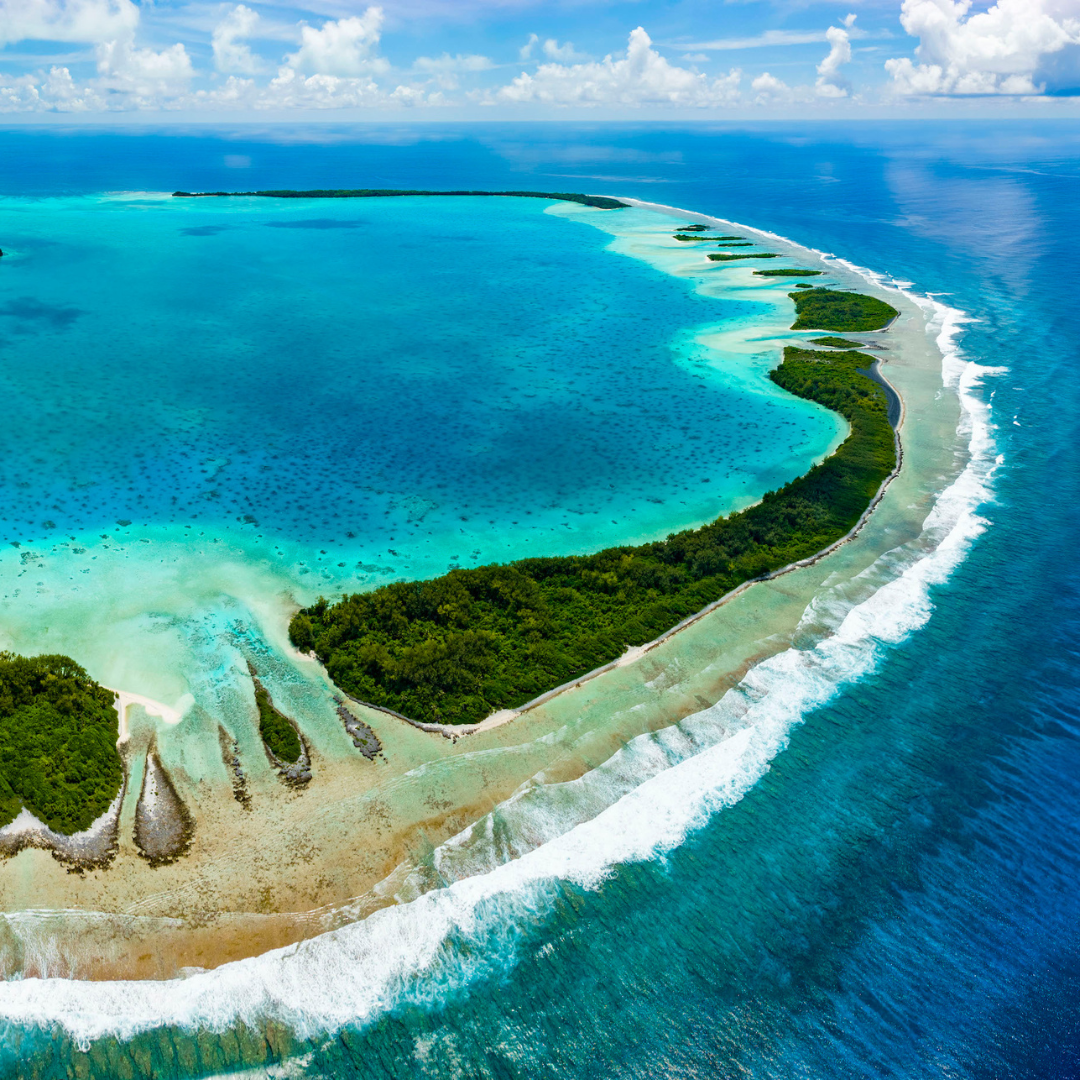
Known as the “Bora Bora of the Austral Islands”, Raivavae’s has earned this distinction of its white sand beaches, with a large emerald lagoon and 28 motus that encircle the lush green main island. The island has a number of giant stone tikis which resemble those found in the Marquesas and on Easter Island, including an unusual smiling tiki. During a circular tour of the island visitors will also discover wood sculptures, an open-air marae temple and a series of Polynesian canoes. After the tour passengers can take a speed boat excursion to relax on one of the motus and swim in the crystal-clear lagoon.

Tubuai, the island of Polynesian crafts
Tubuai is the largest island of this archipelago and hosts the main public and economic services for this island group. Its reef is scattered with fine motu (islands) of coral and volcanic rock. The huge lagoon, nearly twice as large as the island itself, offers 33 sq. mi. (85 km²) of pure aquatic fun. The mild climate also makes these islands ideal for farming. Lilies are grown around the islands for export and can be spotted in the fields as far as the eye can see. The first explorers were struck by the island’s beauty. Toward the end of the 19th Century, explorers Wallis and Cook took a liking to the lush vegetation and crystal-clear water of the island. However, the area did not look appropriate for good anchorage given the large barrier reef around the coast. This disadvantage turned into an incredible advantage in the eyes of the famous mutineers of the HMS Bounty. Led by Christian Fletcher, they built Fort George, which no longer exists, before leaving for Pitcairn.
Rimatara, the island of the Lori
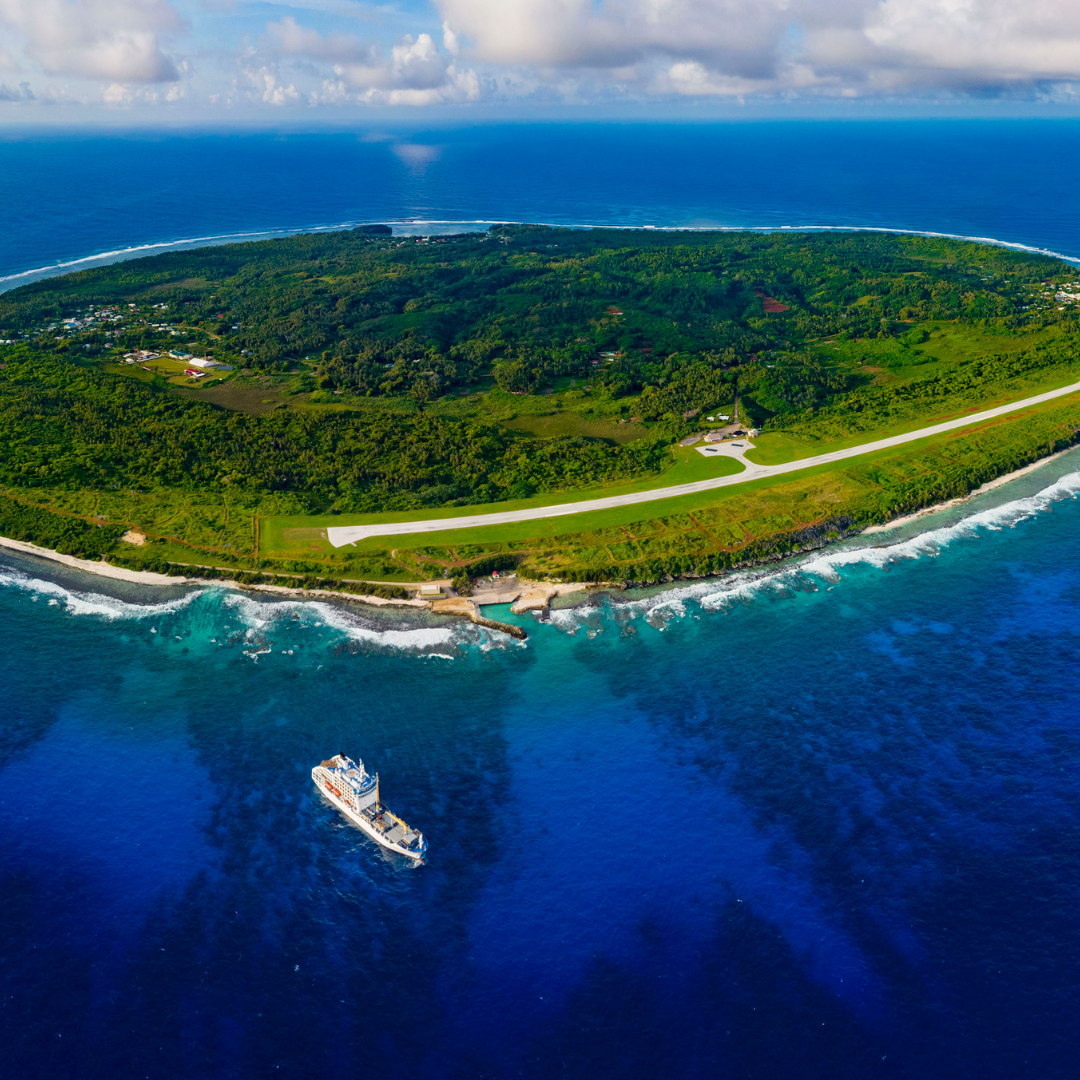
Rimatara was the last island of the Australs to be approached, in 1811. The narrowness of its only pass and the absence of an anchorage do not allow easy access, which helped to preserve it. When missionaries were sent to the island in 1821 the 300 inhabitants were all converted quickly. Rimatara was an independent kingdom until 1900, and the royal line of Temaeva ended following the death of the last chief in 1923. At the request of the inhabitants the island was formally annexed to France in 1901. Since then, life flows along to the rhythm of copra, basketry, plantations and fishing. In 2006 the airport was inaugurated, helping to gradually open up this haven of peace and biodiversity. Rimatara takes pride in being the home of a rare specimen of a magnificent endemic bird called the Lori Kuhl, a small colorful parrot.